search
The industrial cooling landscape is filled with various compression technologies, but the classic reciprocating piston machine continues to hold a critical position in modern thermal engineering. While heavy industrial facilities often focus on rotary alternatives for massive, unchanging volumetric loads, reciprocating systems excel where operational flexibility, high pressure ratios, and precise capacity control are required. For small-to-medium facilities and fluctuating cold chain demands, this time-tested technology delivers exceptional performance.
The long-term engineering success of the reciprocating machine lies in its positive-displacement mechanism, which converts rotational energy into high gas pressures through structured physical cycles. Driven by a balanced crankshaft and connecting rod assembly, the compression process occurs within heavy-duty cylinders through two distinct mechanical strokes:
The Intake Displacement: As the internal crankshaft rotates, it pulls the connecting rod and piston downward. This movement expands the space within the cylinder wall, creating a low-pressure vacuum that pulls low-temperature refrigerant gas through the intake valve.
The Compression Discharge: The piston reverses direction at its lowest point, moving upward to compress the trapped refrigerant vapor into a fraction of its original volume. As the pressure hits the target system threshold, the discharge valve opens, forcing the high-pressure gas directly toward the condenser.
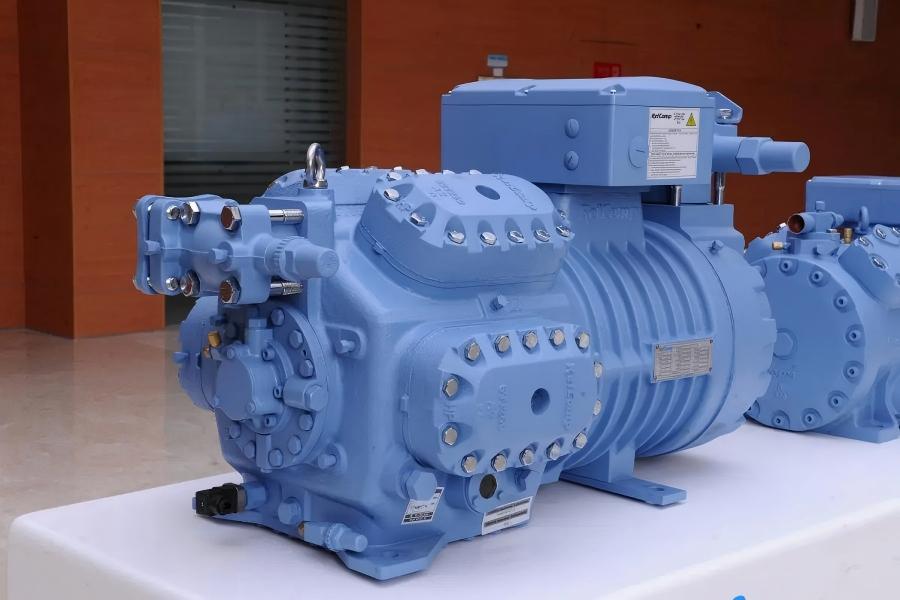
By utilizing individual cylinder divisions, a premium unit sourced from a piston compressor factory achieves high compression ratios per stage. This design allows the system to deliver dependable discharge forces even when faced with extreme differences between evaporation and condensation temperatures.
Industrial refrigeration loops require hardware that can adapt to variable production schedules without wasting energy. Piston-driven machinery offers unique advantages that make it an economical choice for modern processing facilities.
| Engineering Parameter | Reciprocating Piston Units | Rotary Screw Systems |
|---|---|---|
| Operational Duty Fit | Intermittent, Variable, and On-Demand Chilling | Continuous, Constant, and Linear Volumetric Loads |
| Pressure Building Capacity | Outstanding Per-Stage Pressure Creation | Moderate Per-Stage Pressure (Requires Subcooling) |
| Part-Load Energy Costs | Scales Power Down Linearly via Valve Unloaders | Higher Losses at Low Capacity Without VFD Controls |
| Field Serviceability | Highly Accessible Cylinder Head Assemblies | Complex, Specialized Factory Rebuilds Required |
| Equipment Footprint Cost | Economical Capital Cost for Target Zones | Substantial Upfront Investment for Large Systems |
Industrial cooling loads change constantly based on ambient weather, inventory volume, and shift schedules. Reciprocating units handle these fluctuations efficiently through mechanical cylinder unloading systems. When cooling demand drops, the system holds the suction valves open on designated cylinders, stopping them from compressing gas. This allows a six-cylinder compressor to run at partial capacities like 66% or 33% displacement, scaling down its power draw almost linearly to lower factory energy costs.
Certain freezing processes demand deep sub-zero temperatures, which create steep pressure differentials across the cooling loop. The physical seal created by precision-engineered piston rings minimizes gas blow-by, allowing the compressor to maintain high volumetric output against demanding head pressures.
Depending on the plant architecture and chosen refrigerant, engineers select specific design types from an industrial piston compressor factory to optimize performance.
Semi-hermetic units house the electric motor and the compressor crankshaft within a single, heavy-duty cast-iron shell. This enclosed design eliminates the need for an external mechanical shaft seal, preventing refrigerant leaks and reducing emissions. The bolted construction ensures the unit remains fully field-serviceable, allowing technicians to inspect valve plates or internal bearings on-site if needed.
Open-drive configurations utilize an external motor connected to the compressor shaft via a flexible coupling or belt system. This setup is standard in large industrial Ammonia (R717) refrigeration loops. Because ammonia can damage the copper windings in standard hermetic motors, isolating the motor from the refrigerant path improves plant safety and allows for easy motor maintenance without opening the pressurized cooling lines.
The precise capacity scaling and durability of reciprocating machinery make it an essential asset across multiple demanding sectors:
Logistics Warehouses and Commercial Cold Rooms: These facilities experience frequent thermal shifts as loading dock doors open and close. Reciprocating compressor racks adapt quickly to these changing conditions, keeping temperatures uniform across multiple independent rooms.
Abattoirs and Quick-Freeze Blast Tunnels: Meat and seafood processing lines rely on rapid, deep freezing to maintain product quality. Multi-stage piston compressor configurations handle the steep pressure ratios required by these blast tunnels efficiently.
Chemical Production and Batch Chilling Systems: Many chemical processing plants generate intense heat during specific exothermic reactions. Piston units are ideal for these intermittent cycles, starting and stopping reliably on demand without experiencing the thermal stress common in larger rotary hardware.
Selecting the correct compressor model requires analyzing your plant’s operational patterns. First, evaluate your daily thermal load profile. If your facility runs primarily on variable, fluctuating demands or manages several small evaporators at different temperatures, a multi-cylinder reciprocating rack will offer better energy performance than an oversized rotary unit.
Second, consider your local climate and maintenance resources. Reciprocating compressors work reliably with air-cooled condensers even in hot ambient climates because their positive-displacement design maintains consistent output against high head pressures. Additionally, these systems are highly serviceable, allowing internal wear parts like valve plates and piston rings to be replaced locally, avoiding extended facility downtime.
Fujian FSE Supply Chain Management CO., Ltd. (FSE) is a comprehensive industrial platform specializing in heavy-duty cold chain hardware, automated manufacturing assets, and tailored turnkey engineering. We work directly with global engineering firms, contractors, and production plants to deliver heavy-duty compression systems engineered for challenging industrial applications.
Our specialized production lines are built using high-tensile alloys and forced-feed lubrication systems to ensure reliable performance under demanding pressure profiles. Additionally, FSE simplifies overseas logistics. Our compression systems and auxiliary components are engineered for containerized transportation, enabling smooth shipping, lower ocean freight costs, and straightforward on-site installation. Explore our complete selection of integrated chillers, condensers, and high-capacity cooling setups on our Refrigeration Equipment Page.
To implement an energy-efficient cooling loop backed by reliable thermodynamic calculations and professional technical layout drawings, reach out to our engineering support division today. Contact us through our official FSE Contact Page to begin your technical consultation.
While rotary compression systems continue to grow in popularity, the industrial refrigeration piston compressor remains a reliable, highly efficient choice for installations that require high-pressure performance, precise part-load flexibility, and straightforward field serviceability. By evaluating your facility's load profile, compression ratios, and component metallurgy, you can protect your capital investments from premature wear. Partnering with an engineering-focused supplier like FSE ensures your plant receives robust compression assets designed for long-term energy savings and consistent operational uptime.
A piston compressor is the preferred choice for small-to-medium cooling loads, systems with highly variable or intermittent capacity demands, and applications requiring high-pressure differentials. Screw compressors are better suited for large, continuous full-load operations.
Cylinder unloaders mechanically hold the suction valves open in specific cylinders, preventing them from compressing gas. This reduces the mass flow of the refrigerant and lowers the motor’s power draw almost linearly, matching your facility’s real-time partial load.
Yes. Open-drive piston compressors are widely used in industrial Ammonia (R717) and Carbon Dioxide (R744) subcritical or transcritical systems due to their ability to manage high pressures and isolate motor components from corrosive gases.
Standard maintenance involves routine oil analysis, monitoring crankcase heater performance, cleaning suction strainers, and checking valve plates for wear. Routine valve inspections help maintain optimal volumetric efficiency and prevent internal blow-by.