search
An evaporative condenser can deliver excellent heat-rejection efficiency — but water chemistry, airborne contaminants, and maintenance discipline determine whether it runs reliably for years or degrades quickly from scale, corrosion, and biofouling. Understanding the evaporative condenser function (heat transfer through a wetted coil with evaporating water and moving air) makes it easier to see why scaling and corrosion are the two most common life-shortening failure paths. This guide provides practical best practices for longevity-focused operation and maintenance.
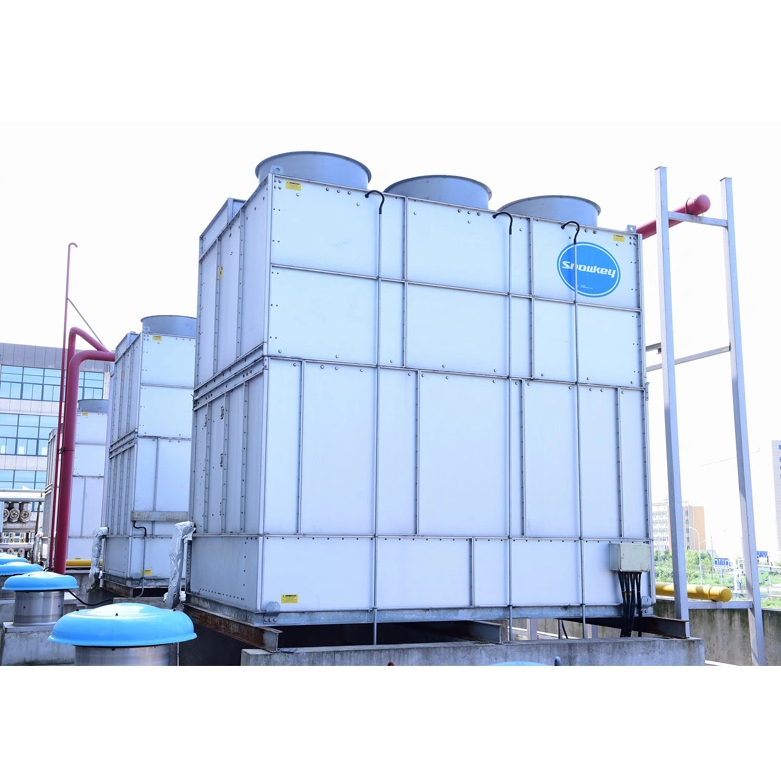
An evaporative condenser rejects heat from the refrigerant circuit through two simultaneous mechanisms: sensible heat transfer from the warm coil to the water film, and latent heat removal as that water film evaporates into the moving airstream. The evaporative mechanism is what makes this equipment significantly more efficient per unit of face area than a dry air-cooled condenser — evaporation is thermodynamically powerful relative to sensible cooling.
| Heat Transfer Path | Mechanism | Percentage of Total Heat Rejection |
|---|---|---|
| Evaporative (latent) | Water evaporates from coil surface → latent heat of vaporization carries energy away | 60–75% in typical design conditions |
| Sensible (convective) | Air temperature rise as it passes through the unit | 25–40% |
Scale is a thermal insulator. As mineral deposits accumulate on the coil surface, they add a layer of resistance between the refrigerant and the water film. The effect compounds with deposit thickness.
| Scale Thickness | Approximate Reduction in Heat Transfer | System Consequence |
|---|---|---|
| 0.5 mm | 10–15% | Early rise in condensing pressure; reduced system capacity |
| 1.5 mm | 30–40% | Significant head pressure elevation; compressor operating near limits |
| 3 mm+ | 50%+ | System capacity severely compromised; potential high-pressure trips |
Rising head pressure trend over weeks with no change in ambient conditions
Increased compressor discharge temperature
Higher fan and pump energy consumption relative to previous periods
Visible white deposits around nozzles or at the base of the coil
Uneven wetting pattern on the coil face — dry zones indicate blocked nozzles or heavy local scale
Every kilogram of water that evaporates leaves behind the minerals it carried. If this concentrated mineral content is not continuously bled from the system, the concentration rises until minerals precipitate as scale on the hottest surface — the refrigerant coil.
The ratio of mineral concentration in the circulating water versus the makeup water is called cycles of concentration (COC). Higher COC means more concentrated water; the scaling risk increases sharply above COC 4–6 without effective chemical treatment.
| COC Target | Blowdown Rate (approximate) | Water Consumption | Scaling Risk |
|---|---|---|---|
| 2 | High blowdown — 50% of evaporation rate | High | Low |
| 4 | Moderate — 25% of evaporation rate | Moderate | Manageable with treatment |
| 6 | Low — 17% of evaporation rate | Low | Higher — requires active chemical treatment |
Conductivity measurement is the practical proxy for COC. Set a conductivity setpoint in the blowdown controller and verify it against the makeup water conductivity to confirm actual COC.
Measure makeup water hardness and alkalinity — this determines the treatment requirement
Set blowdown controller conductivity setpoint based on the site water analysis and target COC
Inspect all spray nozzles monthly — clogged nozzles create dry zones that accumulate scale faster than wetted zones
Install a side-stream filter sized for 10% of circulation pump flow to remove suspended solids that act as nucleation sites for scale
Apply scale inhibitor chemistry matched to the dominant scaling species (calcium carbonate, calcium sulfate, or silica) based on the water analysis
| Corrosion Driver | Source | Effect |
|---|---|---|
| Low pH excursion | CO2 absorption from air; acid overdose | Aggressive general corrosion of carbon steel components |
| Chlorides | Makeup water quality; industrial atmosphere | Pitting corrosion on steel and stainless; particularly aggressive above 200 ppm |
| Oxygen concentration | Aeration in the basin and spray system | Accelerates electrochemical corrosion on carbon steel |
| Galvanic coupling | Dissimilar metals in contact in the water circuit | Anodic metal corrodes sacrificially — steel fasteners near copper accelerate |
| Under-deposit corrosion | Microbes or scale creating oxygen-depleted zones | Localized pitting that perforates coil tubes |
| Parameter | Target Range | Why It Matters |
|---|---|---|
| pH | 7.0–8.5 | Below 7.0 is acidic and aggressive; above 8.5 scales more easily |
| Total dissolved solids | Controlled by COC target | Higher TDS increases conductivity and electrochemical corrosion rate |
| Chlorides | Below 250 ppm for carbon steel; below 50 ppm for stainless steel | Key pitting corrosion driver |
| Corrosion inhibitor residual | Per chemical supplier specification | Forms a protective film on metal surfaces — must be maintained continuously |
Coil material: galvanized steel coils are standard; stainless steel or copper-nickel is specified for aggressive water or industrial atmospheres
Post-assembly coatings: epoxy or polymer coating over the assembled coil provides a barrier against chemical attack — particularly valuable in coastal or industrial air environments
Sacrificial anodes: zinc or magnesium anodes in the basin protect steel basin surfaces in aggressive water conditions
Basin lining: bituminous or epoxy lining of the steel basin extends its service life in chemically challenging applications
Biofilm — microbial slime — causes two simultaneous problems. It blocks water distribution channels and reduces airflow through fin passages, directly reducing the evaporative condenser function. And it creates oxygen-depleted zones under the biofilm where under-deposit corrosion proceeds rapidly, independent of the bulk water chemistry.
| Biofouling Effect | Mechanism | Consequence |
|---|---|---|
| Reduced spray coverage | Slime blocks nozzles and distribution headers | Dry zones on coil; scale accumulates faster |
| Reduced airflow | Biofilm and debris partially block fin passages | Lower heat rejection rate; higher head pressure |
| Under-deposit corrosion | Oxygen-depleted zone under slime layer | Localized pitting — can perforate coil tubes without warning |
| Legionella risk | Warm water with nutrients creates growth conditions | Regulatory and public health obligation in most jurisdictions |
Use oxidizing biocide (chlorine or bromine based) as the primary residual control — maintain measurable residual in the basin at all times during operation
Supplement with non-oxidizing biocide on a shock-dose schedule to address organisms that develop tolerance to oxidizing biocides
Document dosing and residual levels — required for regulatory compliance in many markets
Confirm biocide compatibility with the corrosion inhibitor in use — some combinations reduce inhibitor effectiveness
Basin cleaning: physical removal of sediment, slime, and debris at least twice per year — more frequently in dusty or cottonwood-prone locations
Strainer service: clean basin and pump strainers weekly during operation; monthly minimum
Drift eliminator inspection: check annually for blockage or damage — drift eliminators control both water loss and microbial aerosol discharge
| Frequency | Inspection Items | Action if Abnormal |
|---|---|---|
| Daily | Water level; makeup valve operation; basin conductivity | Adjust blowdown setpoint; check makeup valve function |
| Weekly | Spray pattern coverage; chemical residuals; strainer condition | Clean nozzles; adjust chemical dosing; clean strainers |
| Monthly | Nozzle condition; fan vibration and belt tension; motor amperage; visible coil condition | Clean or replace nozzles; tension or replace belts; investigate scale if visible |
| Seasonal shutdown | Full basin cleanout; coil inspection; nozzle replacement; fan bearing service | Address any corrosion; apply protective treatment; document condition |
| Seasonal startup | Flush and clean basin; leak check; verify controls; water treatment startup protocol | Confirm blowdown controller setpoint; verify chemical feed pump operation |
| KPI | Measurement | Trend That Signals a Problem |
|---|---|---|
| Condensing temperature approach | Condensing saturation temp minus ambient wet-bulb | Rising trend indicates reduced heat transfer from scale or biofouling |
| Head pressure trend | Weekly average at comparable ambient conditions | Rising trend over months = degrading condenser performance |
| Water consumption | Litres per hour at constant load | Rising above the calculated evaporation + blowdown rate indicates drift eliminator issue or basin overflow |
| Chemical consumption | Litres per day at constant water volume | Rising consumption to maintain residuals indicates increasing demand — investigate source |
The most reliable way to extend evaporative condenser service life is to manage the two enemies the design naturally faces: mineral scaling and corrosive chemistry. When you align water treatment, filtration, biocide control, and regular mechanical inspection with the real evaporative condenser function, you reduce head-pressure creep, avoid coil damage, and maintain efficiency over the long term. Prevention is consistently less expensive than coil replacement.
Q1: What is the evaporative condenser function in simple terms?
It rejects heat from the refrigerant circuit by spraying water over the condenser coil while moving air through the unit. The evaporation of the water film carries away latent heat from the coil surface — this evaporative mechanism removes 60–75% of the total heat rejected, making evaporative condensers significantly more efficient than dry air-cooled alternatives at equivalent ambient temperatures.
Q2: Why does scaling reduce evaporative condenser performance so significantly?
Mineral scale deposits act as thermal insulation on the coil surface, blocking heat transfer from the refrigerant to the water film. A scale layer of just 1.5 mm can reduce heat transfer by 30–40%, which raises the condensing temperature and head pressure, reduces system capacity, and increases compressor power consumption.
Q3: What is the most effective way to prevent scale buildup?
Control cycles of concentration through automatic blowdown managed by a conductivity controller. Install a side-stream filter to remove suspended solids that act as nucleation sites. Apply a water treatment chemical program (scale inhibitor and appropriate dispersant) matched to the site water analysis. Inspect and clean spray nozzles monthly to ensure complete coil wetting — dry zones scale faster than wetted surfaces.
Q4: How do I reduce corrosion risk in an evaporative condenser?
Maintain water pH in the 7.0–8.5 range at all times — pH below 7.0 is aggressively corrosive to steel. Control chloride levels below the threshold for the coil material. Maintain continuous corrosion inhibitor residual as specified by the water treatment program. Keep surfaces free of biofilm and scale, as under-deposit corrosion is a primary cause of coil perforation independent of bulk water chemistry.
Q5: How often should an evaporative condenser be cleaned?
Basin cleaning should occur at least twice per year — at seasonal shutdown and at seasonal startup. Nozzle inspection and cleaning should be monthly during operation. Strainer cleaning should be weekly during operation. More frequent cleaning is required in dusty environments, during cottonwood season, or when the water treatment program shows increasing chemical demand indicating rising biological or scale activity.