search
Selecting the right industrial refrigeration partner is a critical decision for heavy industries, commercial fishing, and large-scale concrete cooling projects. An ice block plant is a substantial capital investment that impacts operational costs, production efficiency, and product quality for decades. When evaluating global ice block plant manufacturers, looking beyond standard product catalogs is essential.
A reliable manufacturing partner does not just sell machinery; they deliver comprehensive engineering design, advanced thermal calculations, and long-term system optimization. This guide outlines the key technical factors, engineering methodologies, and technological comparisons necessary to evaluate industrial ice plant manufacturers effectively.
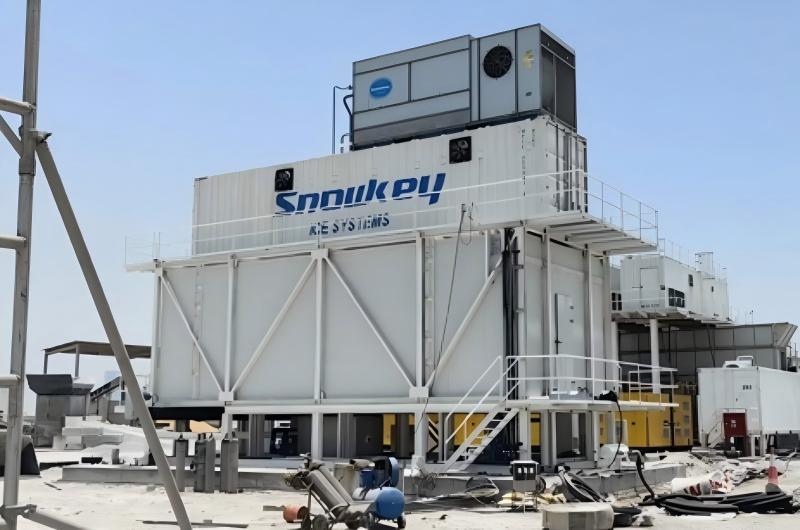
Industrial block ice production requires complex thermal engineering rather than simple equipment assembly. Experienced ice block plant manufacturers must possess deep engineering capabilities to manage heavy-scale workloads and challenging ambient conditions.
A standard, off-the-shelf ice machine rarely fits perfectly into an industrial facility. Elite ice plant manufacturers conduct a comprehensive assessment of the physical site layout, structural load bearing, and local environmental conditions before production begins. This engineering phase ensures the equipment integrates seamlessly with existing power grids, water supply lines, and building architectures.
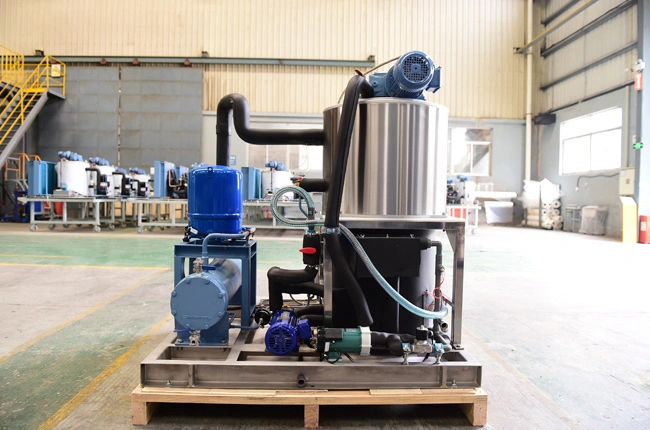
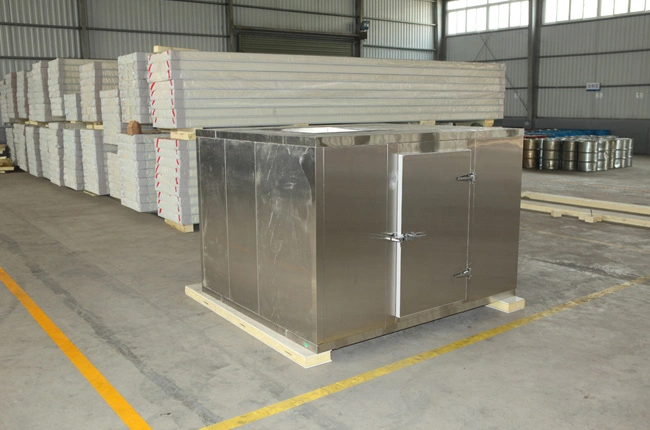
The core refrigeration unit is just one component of a functioning plant. Engineering capabilities are defined by how effectively a manufacturer integrates auxiliary systems. A qualified partner seamlessly connects water pretreatment loops, heavy-duty filtration, and mechanized harvesting mechanisms like cranes or automatic pushers. Furthermore, they design insulated ice storage rooms, integrated ice crushing systems, and advanced Programmable Logic Controller (PLC) cabinets that orchestrate the entire production cycle without manual intervention.
One of the most critical technology choices when consulting with ice block plant manufacturers is selecting between a Direct Fast-Freezing System (Aluminium Alloy Evaporator) and a Traditional Brine Tank System. Both technologies remain relevant in industrial markets, and a qualified manufacturer should possess the technical expertise to deliver either system based on project requirements.
| Feature / Metric | Direct Cooling System | Traditional Brine System |
|---|---|---|
| Evaporator Material | Food-Grade Aluminium Alloy | Coiled Steel inside Concrete/Iron Tank |
| Freezing Medium | Direct Refrigerant Flow | Sodium Chloride or Calcium Chloride |
| Harvesting Method | Hot Gas Defrost (Automatic Pushing) | Crane Lift & Warm Water Thawing Tank |
| Hygiene Level | High (Food-Grade, No Chemical Salt) | Medium (Risk of Brine Contamination) |
| Maintenance Profile | Low (No Salt Corrosion, No Top-Ups) | High (Corrosion Management, Salt pH) |
| Footprint Required | Compact (Saves up to 50% Space) | Large (Requires Heavy Civil Works) |
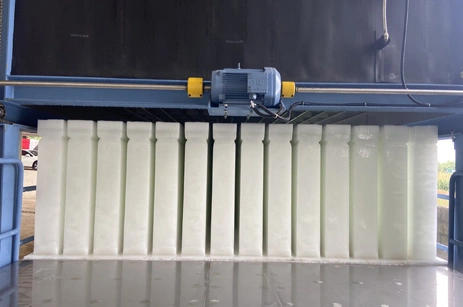
Direct refrigeration utilizes food-grade aluminium alloy plates as the evaporator. The refrigerant circulates directly inside the plates, freezing the water quickly and uniformly. Once the freezing cycle completes, the system switches to an automatic hot gas defrost cycle, releasing the blocks within minutes onto an automated tilting ramp. This methodology is highly hygienic, space-saving, and completely eliminates chemical salt handling from your factory floor.
The traditional brine system utilizes a concrete or steel tank filled with a high-density salt solution, typically sodium chloride or calcium chloride. Coiled evaporators submerge into the brine to lower its temperature, and metal ice cans filled with fresh water are lowered into the liquid via an overhead crane. After freezing, the crane lifts the heavy cans, submerges them in a thaw tank, and dumps the blocks via mechanical tippers. While it requires more space and civil works, it remains exceptionally robust and simple to repair locally.
To ensure your system operates reliably under continuous peak loads, you should evaluate specific technical parameters when comparing industrial ice plant manufacturers:
First, analyze the exact Coefficient of Performance (COP) calculations under your specific local design conditions, such as high ambient air temperatures and warm inlet water. Second, verify that the manufacturer partners with top-tier industrial compressor brands like Bitzer, Hanbell, or Bock to ensure the configuration matches your specific load profile. Third, check the material specifications carefully; all water-contact surfaces must utilize SUS304 stainless steel or treated, food-grade aluminium alloy to resist oxidation. Finally, evaluate the efficiency of the hot gas defrost design to ensure it does not over-heat the evaporator or waste thermal capacity.
Energy consumption represents the largest ongoing operational cost for industrial ice production. Forward-thinking ice block plant manufacturers utilize several engineering methodologies to lower power consumption and optimize total cost of ownership.
Industrial plants rarely run at 100% capacity year-round. By utilizing VFDs on compressor motors, condenser fans, and brine agitators, the system dynamically adjusts its power draw to match real-time thermal loads. This significantly reduces energy waste during off-peak periods and extends the lifespan of core components.
The selection of the condenser directly dictates the condensing temperature of the refrigeration cycle. Leading manufacturers guide clients toward high-efficiency Evaporative Condensers or specialized Air-Cooled Condensers equipped with anti-corrosion fins, depending on local water availability, ambient moisture, and wet-bulb temperatures.
Modern PLC systems monitor parameters like evaporating pressure, suction superheat, and ambient conditions in real time. Intelligent automation minimizes human error, prevents short-cycling of compressors, and optimizes the exact moment for ice harvesting to maximize energy savings.
Fujian FSE Supply Chain Management CO., Ltd. (FSE) is a comprehensive industrial platform specializing in heavy-duty cold chain hardware, smart manufacturing assets, and tailored turnkey engineering. FSE works directly with clients to bridge the gap between complex industrial demand and cutting-edge technical execution.
We don't believe in one-size-fits-all solutions. Our team analyzes your exact application—whether it is concrete cooling for infrastructure projects, deep-sea fishing preservation, or remote commercial ice distribution. FSE delivers highly customized industrial ice block plants utilizing premium components, precise PLC automation, and robust structural designs engineered to endure challenging ambient conditions.
Explore our complete array of engineering and layout capabilities on our FSE Solutions Page.
Ready to design an energy-efficient, reliable ice factory? Contact the engineering team at FSE today to receive a comprehensive thermodynamic calculation, custom layout proposal, and commercial quote. Let us help you design a high-performance system optimized for maximum efficiency and longevity.
Connect with our technical support and sales specialists directly via our official FSE Contact Page.
Investing in an industrial ice factory requires a deep understanding of engineering capabilities, thermal technology, and long-term efficiency. By choosing between direct cooling and brine systems based on your specific operational needs, and carefully vetting manufacturers on technical parameters like COP and material grades, you protect your capital investment. Partnering with an engineering-focused supplier like FSE ensures that your ice plant operates reliably, cost-effectively, and efficiently for decades to come.
With proper maintenance, a premium industrial block ice plant can operate reliably for 15 to 20 years. Choosing high-grade materials like SUS304 stainless steel and top-tier compressors significantly extends system longevity.
Direct cooling block ice plants generally require up to 50% less physical floor space compared to a traditional brine system. This is because they eliminate the massive concrete or steel brine tank, utilizing a compact, vertical aluminium evaporator instead.
Yes. Modern ice block plant manufacturers engineer systems compatible with environmentally friendly refrigerants like R448A, R449A, or R507, as well as natural refrigerants like Ammonia (R717) for large-scale industrial configurations.
The direct cooling system is typically preferred for food-grade and seafood applications due to its high hygiene profile. It eliminates the risk of brine salt contamination, producing clean, fresh ice blocks that can come into direct contact with fresh catch or food items.